DNA data storage capsule
A capsule that stores humanity's collective knowledge.
- Could grow into a 'knowledge tree' that branches out.
- Could be open for anyone to add to.
- Could be a source for future historians.
- The most practical of the three.
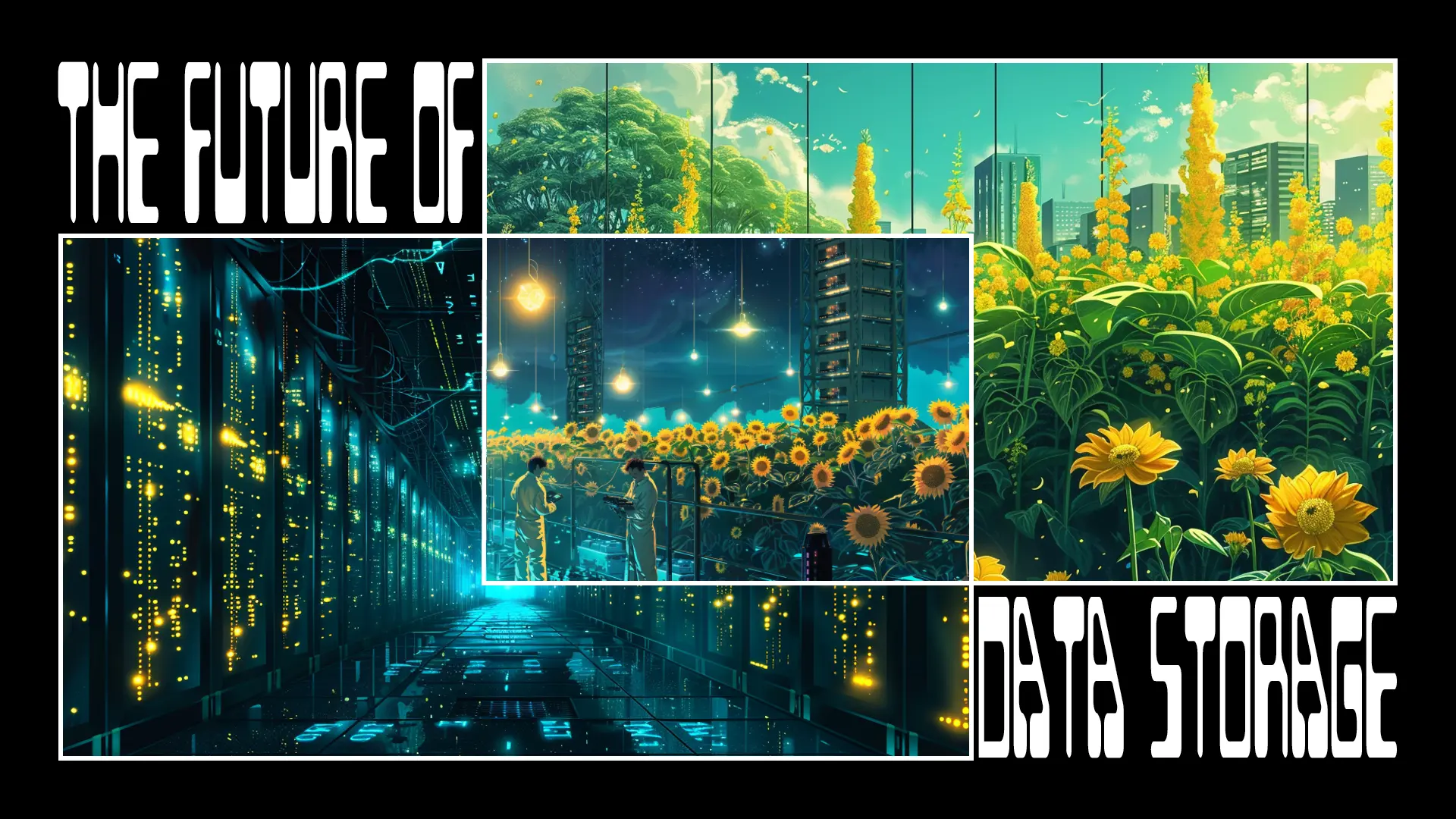
What happens if DNA becomes the main way the world stores data? I used foresight methods to map where the technology is heading, built a world in 2040 around it, and made a magazine from that future.
8 Months
Speculative design, strategic foresight
Exploding data, fragile media, and energy‑hungry data centers create a long‑term sustainability problem. Even as bit density improves, lifespans and materials dependency limit how much we can practically preserve.
We need durable, low-energy, high-density media that can scale across centuries, not upgrade cycles.
Millions of petabytes, 2019–2030. New forecast numbers reveal a widening gap that DNA media could absorb for long-term archives.
Values reconstructed from the IEEE Spectrum graphic (Gartner data) for the DNA case study. Units in millions of petabytes.
DNA holds a huge amount of data in very little space.
A single gram of synthetic DNA can hold as much data as entire fleets of conventional media. The areas show how many devices you would need to match that single gram.
Equivalents derived from Potomac Institute’s The Future of DNA Data Storage (2021). Assumes 1 gram of DNA ~= capacity of 42B USB sticks. This is close to DNA's theoretical capacity (about 455 exabytes per gram) and assumes older, smaller devices; the highest density demonstrated so far is about 215 petabytes per gram (Erlich & Zielinski, 2017).
Properly stored DNA can remain readable for centuries.
Estimated lifespans for common storage media versus properly stored synthetic DNA. A symlog axis makes short and very long durations comparable in one view.
Lifespan estimates synthesized from published research (Frontiers in Bioengineering & Biotechnology, 2022) and insights from an interview with Dr. Lee Organick. Values are illustrative.
DNA needs no power while it sits in storage.
Relative operational energy to keep 1 PB readable over time (normalized: HDD = 100). Passive media avoid continuous power and cooling requirements.
Operational energy index (HDD = 100) for illustration only; excludes writes/migrations. Passive DNA scenarios adapted from Frontiers in Bioengineering & Biotechnology, 2022.
The workflow mirrors a reversible translation: binary data is algorithmically encoded into nucleotide sequences, strands are synthesized by DNA printers, vials of DNA are shelved as passive media, and future readers sequence the strands to decode the bits back into files. Each stage has dedicated tooling, but the payload never leaves the molecular format once written.
Bits are mapped to A/C/G/T sequences with error-aware codecs.
DNA foundries write the sequences into physical strands.
Strands rest in cold, dry capsules that require no power.
Readers recover the strands, sequence them, and reconstruct files.
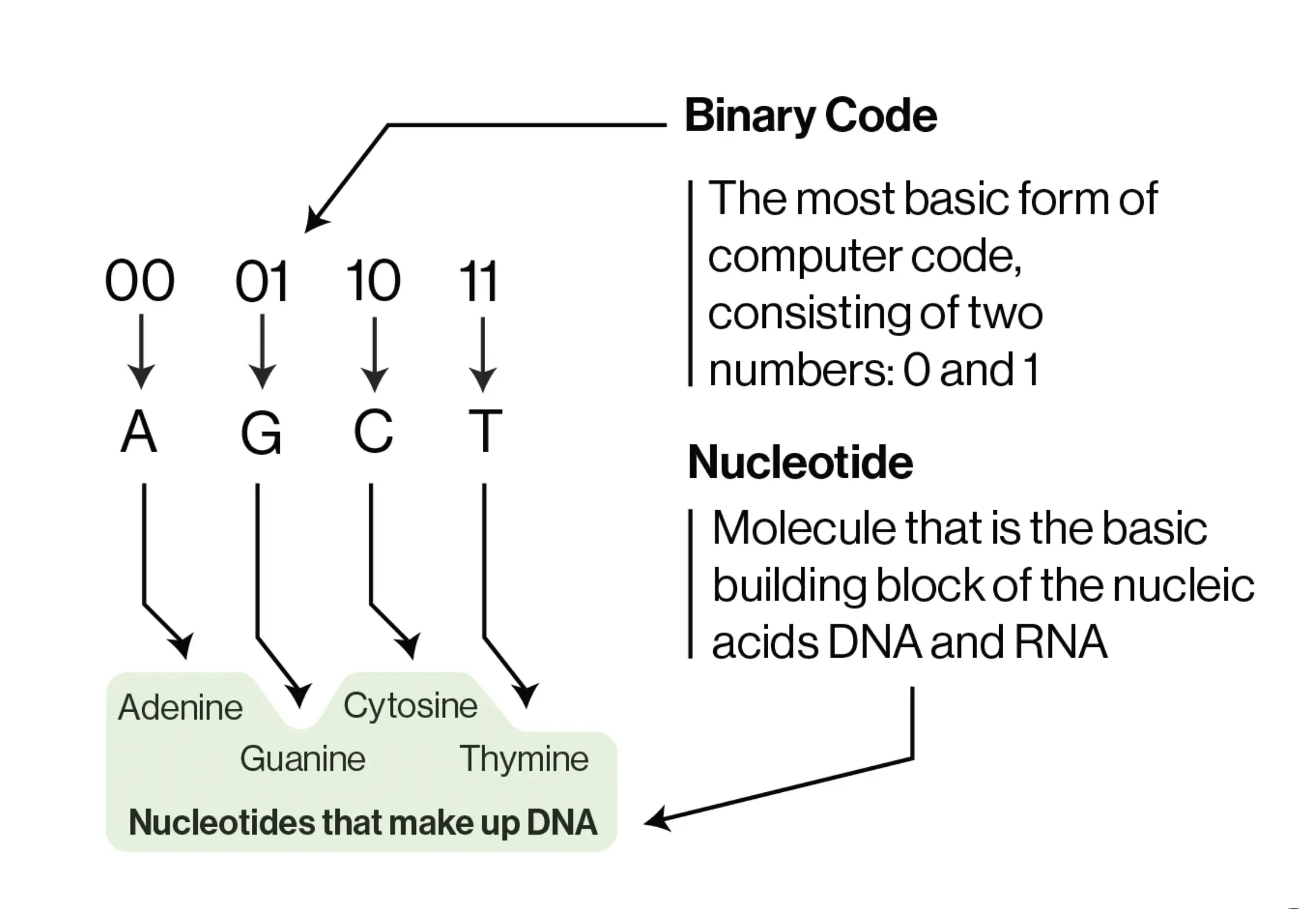
Conceptual pipeline illustrating how digital files become DNA and back again; adapted from speculative workshop sketches.
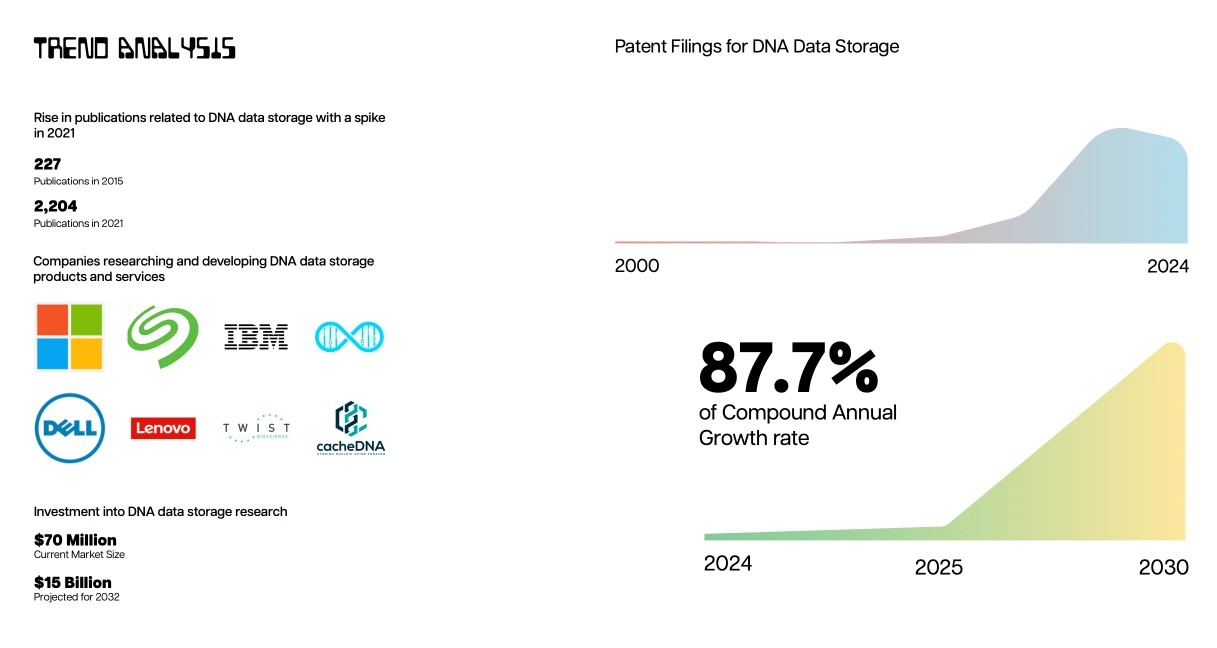
Annual publication counts, 1984–2024. Exact-match query executed February 2024.
Source: PubMed.gov. Query (Title/Abstract scope unless noted):
("DNA data storage" OR "DNA-based data storage" OR ("DNA" AND
                ("data storage" OR "digital storage"))) NOT (biobank OR "sample
                storage" OR preservation)
.
We make more data every year, and it all has to live somewhere. That means more data centres, and data centres use a lot of energy.
Conceptual model of data generation factors
Source: Climatiq
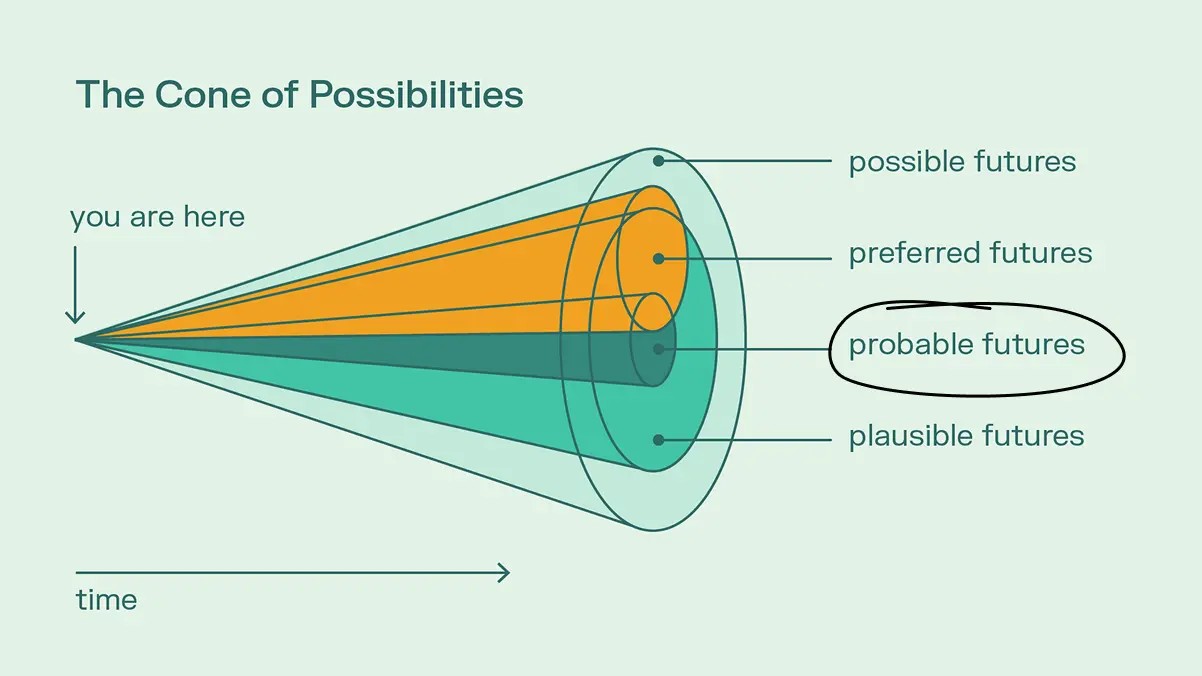
I interviewed a DNA data storage researcher at CacheDNA several times to understand where the industry is going and how she expects DNA storage to be used. That gave me the probable future to build from.
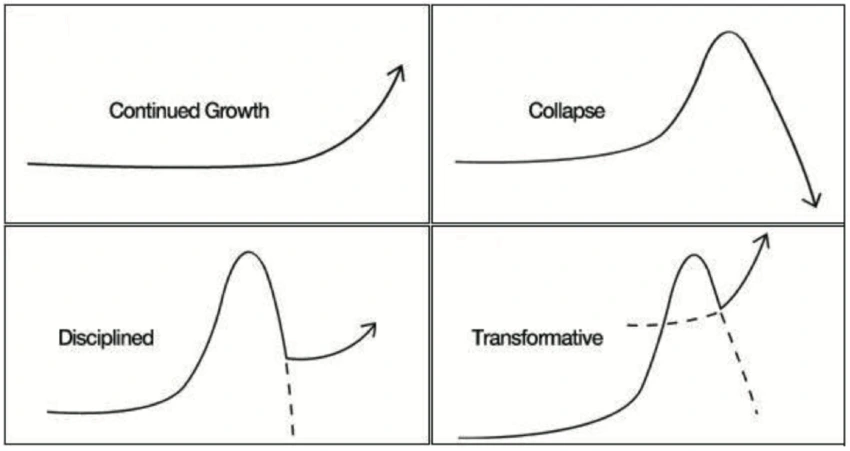
I used Dator's Four Futures to write four scenarios: Growth, Collapse, Discipline and Transformative, each starting from the trends and the interview.
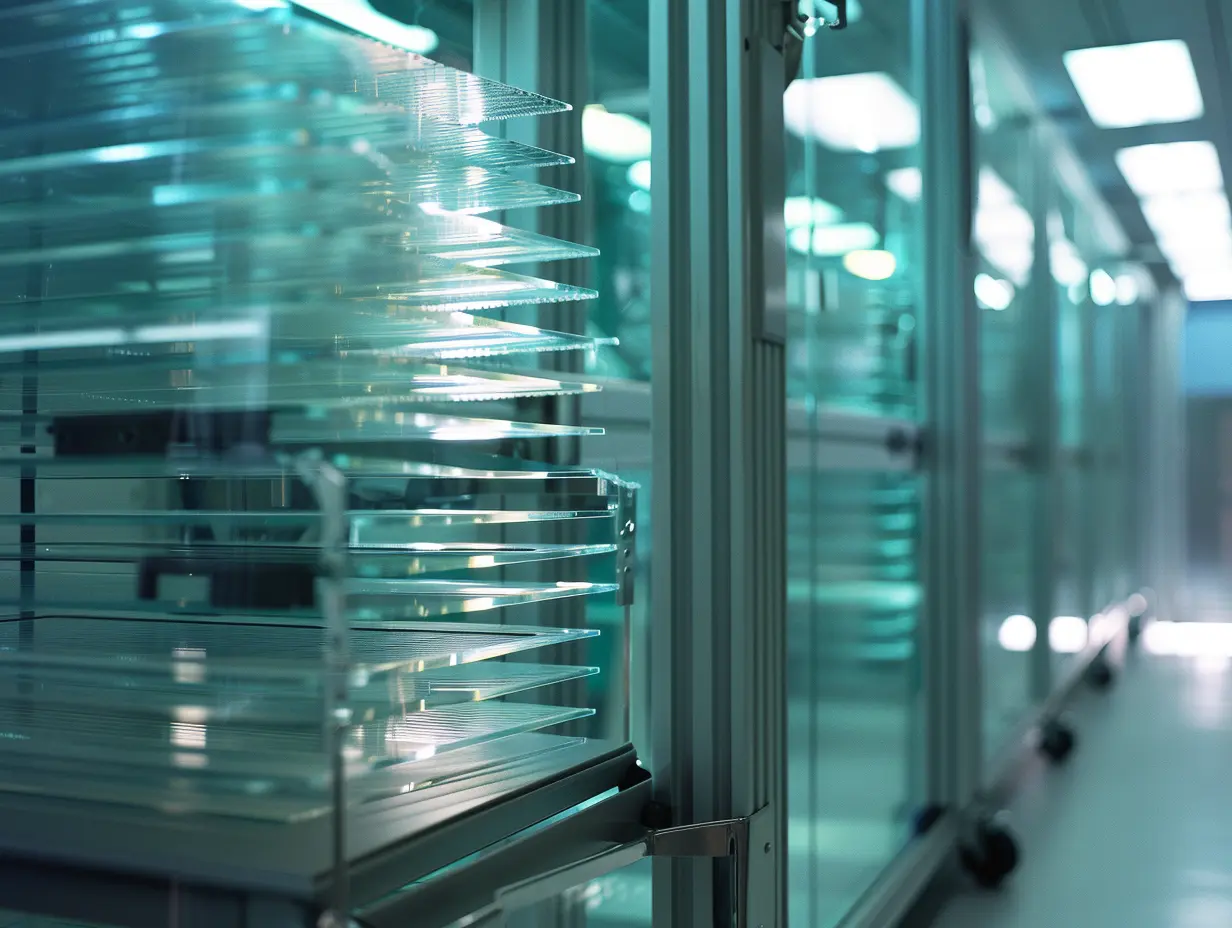
DNA storage keeps improving. Synthesis and sequencing get cheap enough that DNA becomes a normal way to archive data.
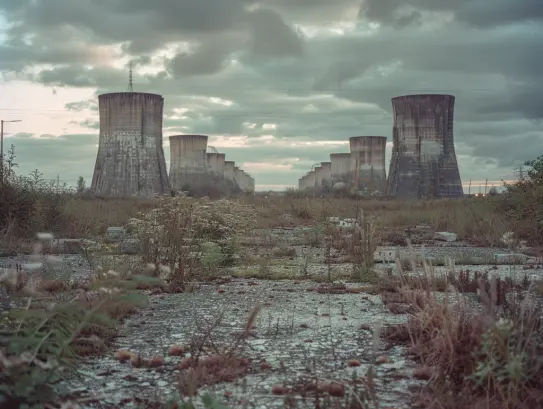
DNA storage stalls on cost and technical problems while data keeps growing and data centres hit climate limits. Storage runs short and people get data quotas.
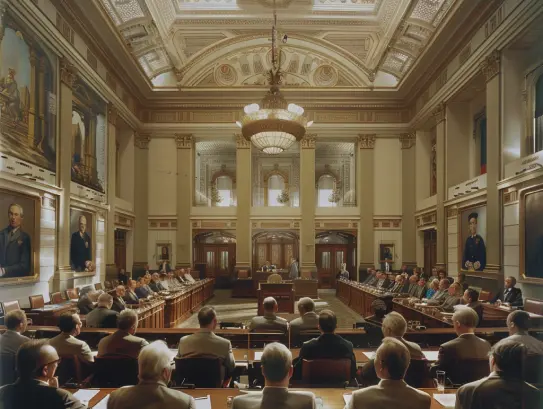
DNA storage works, but society puts strict rules on it. It is used for healthcare, research and sustainability, and privacy comes before surveillance.
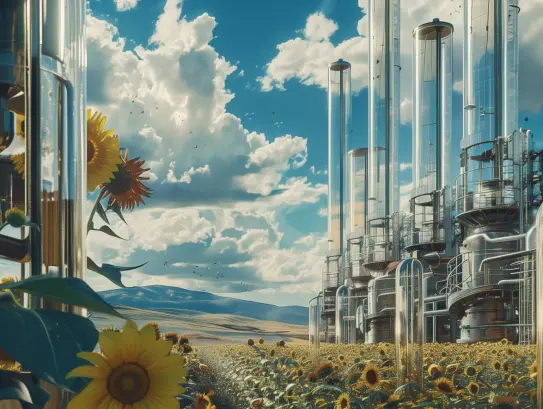
Gene editing makes DNA storage fast and cheap. Farms store data alongside crops, DNA replaces hard drives, and people hold their own data.
I built out the Transformative scenario into a full world using the Protopia framework, which aims for a future that is gradually better rather than perfect.
DNA is the main way data is stored. Farmland in the Midwest has become data vaults, where genetically modified plants hold information. Farm towns have turned into tech towns, and schools and jobs have changed with them.
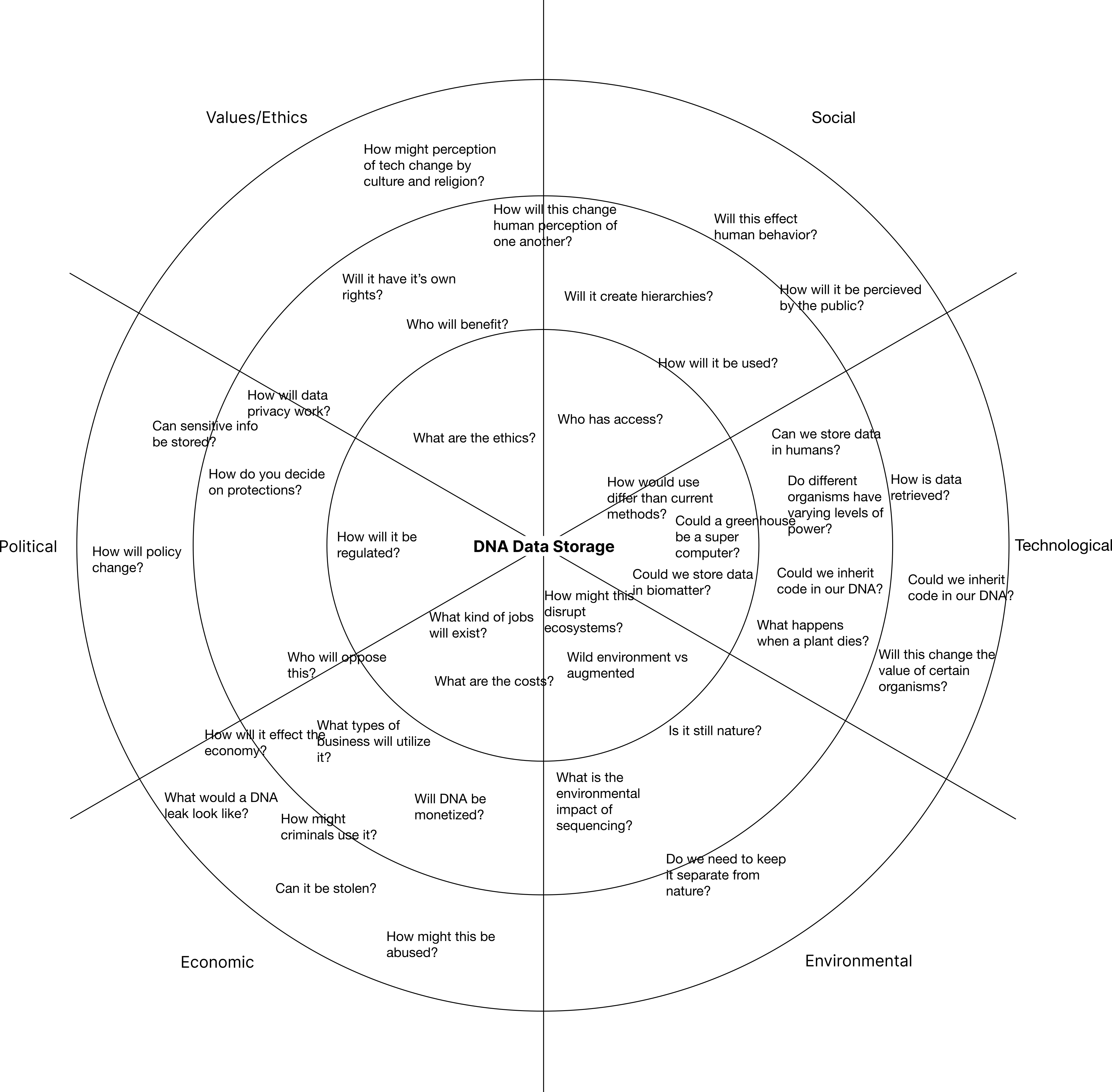
I used an implication map to trace what the 2040 world would change, first directly and then one step further out, across technology, society, the economy, the environment, politics and values.
I made three quick, rough objects from the 2040 world and presented them to a board of futures practitioners.
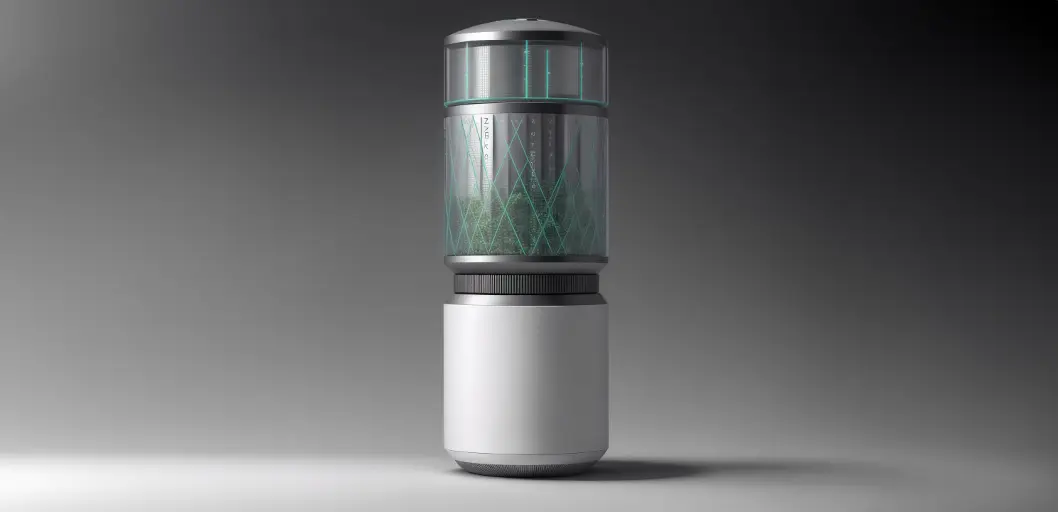
A capsule that stores humanity's collective knowledge.
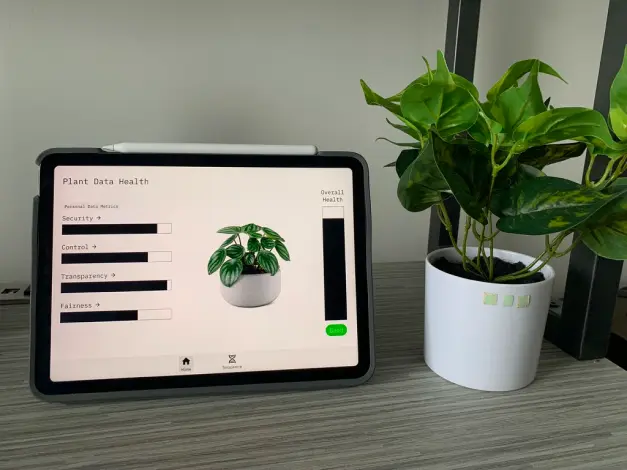
Plants that store personal data and react to its "health" by wilting or blooming.
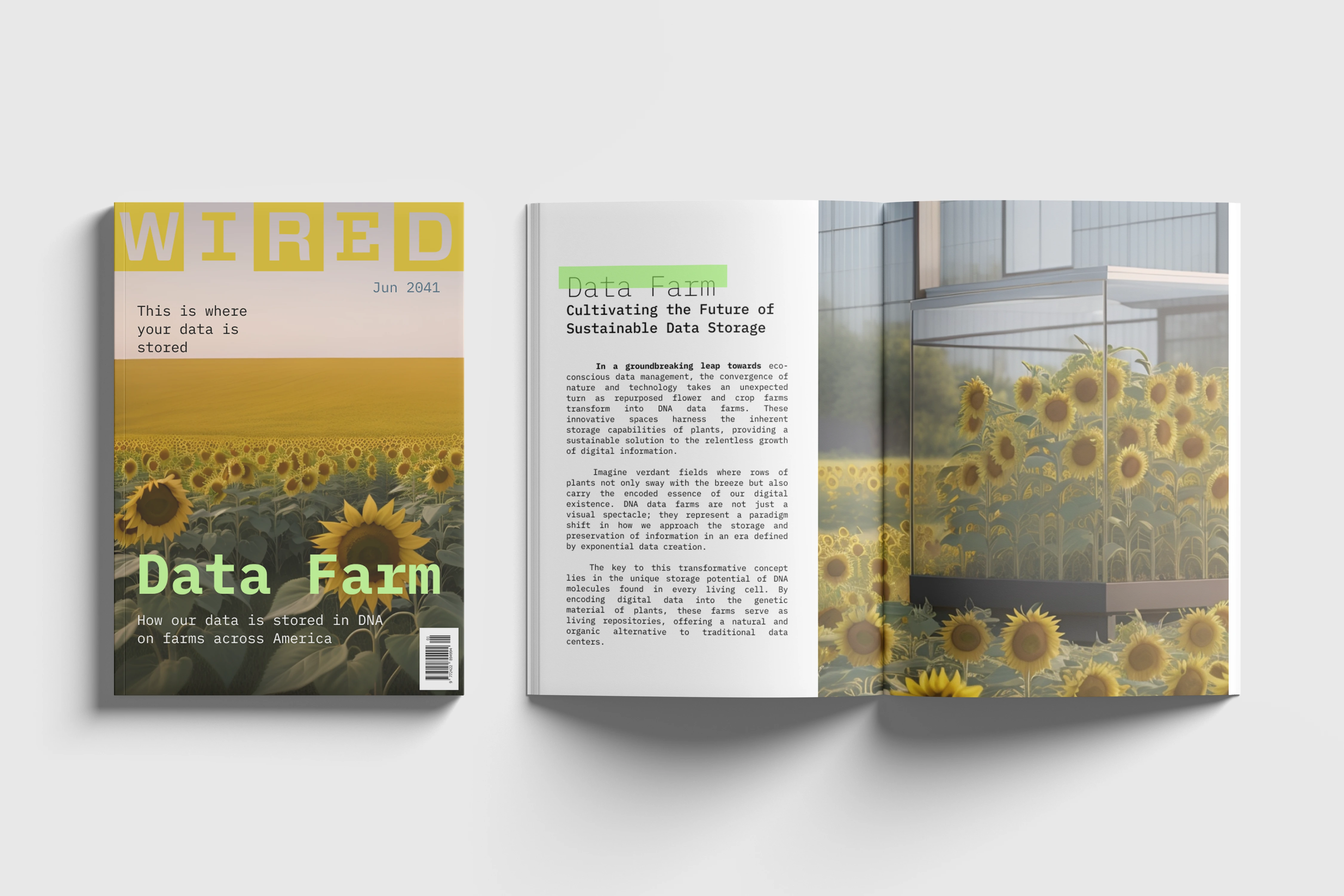
An issue of Wired from 2040, set in a world that stores its data in DNA.
The magazine got the strongest reaction from the board, because it made the future feel believable, so I took it forward. A magazine can also hold a whole world at once: every article and ad shows another part of 2040.
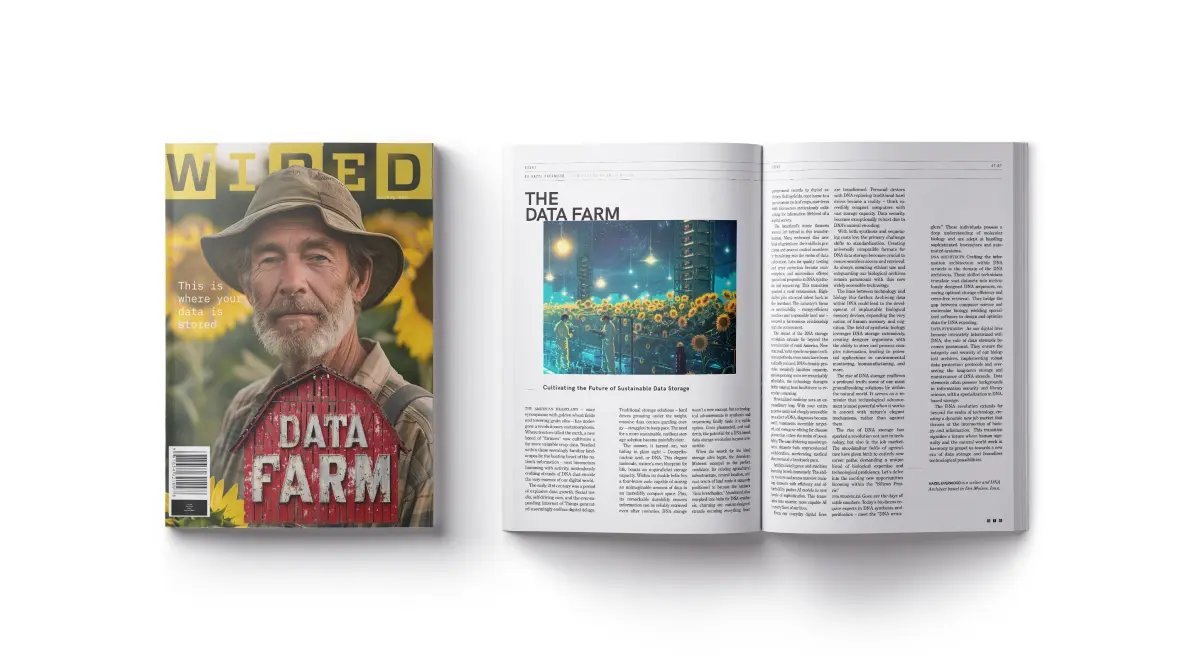
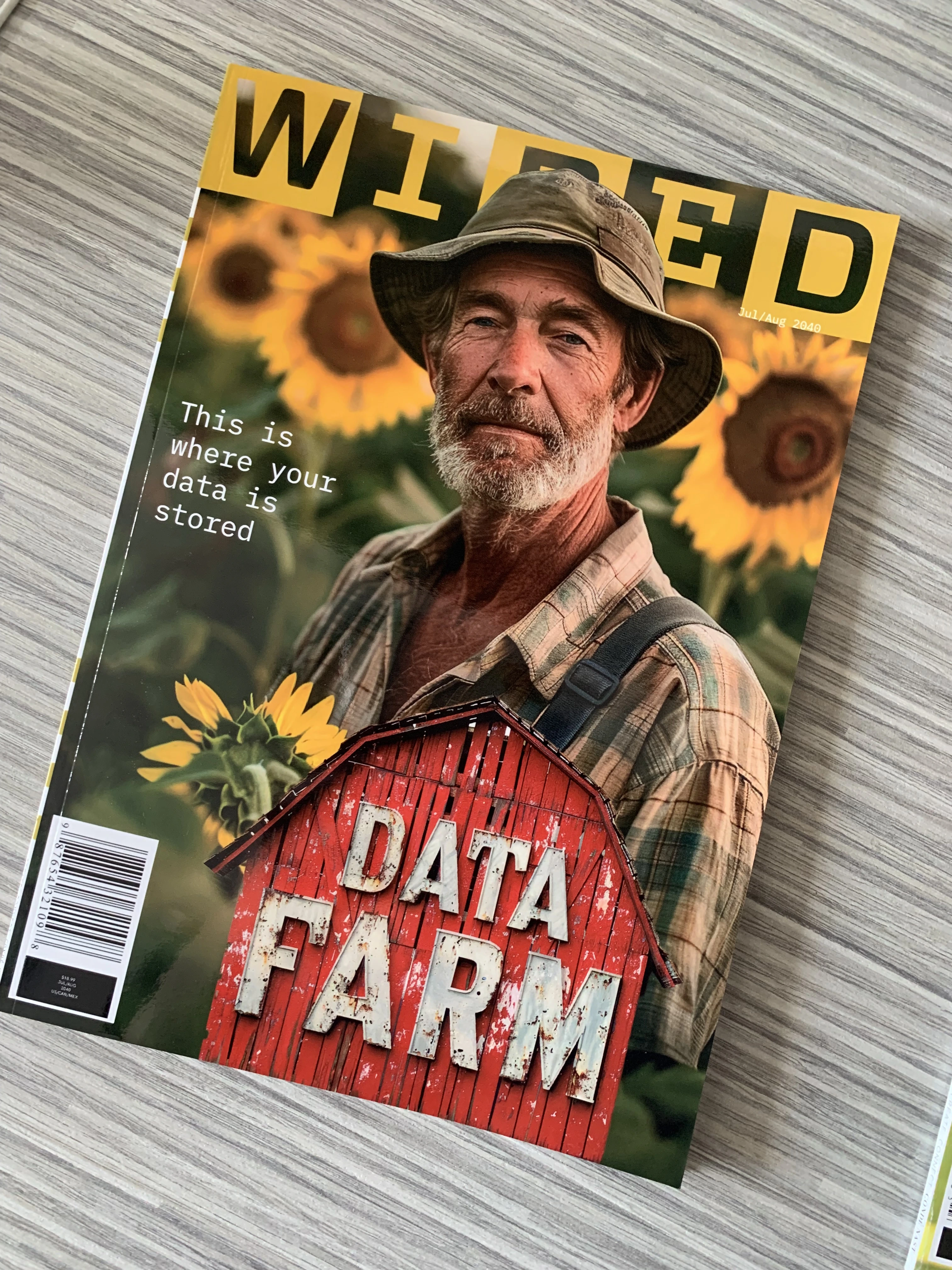
Physical print of the magazine
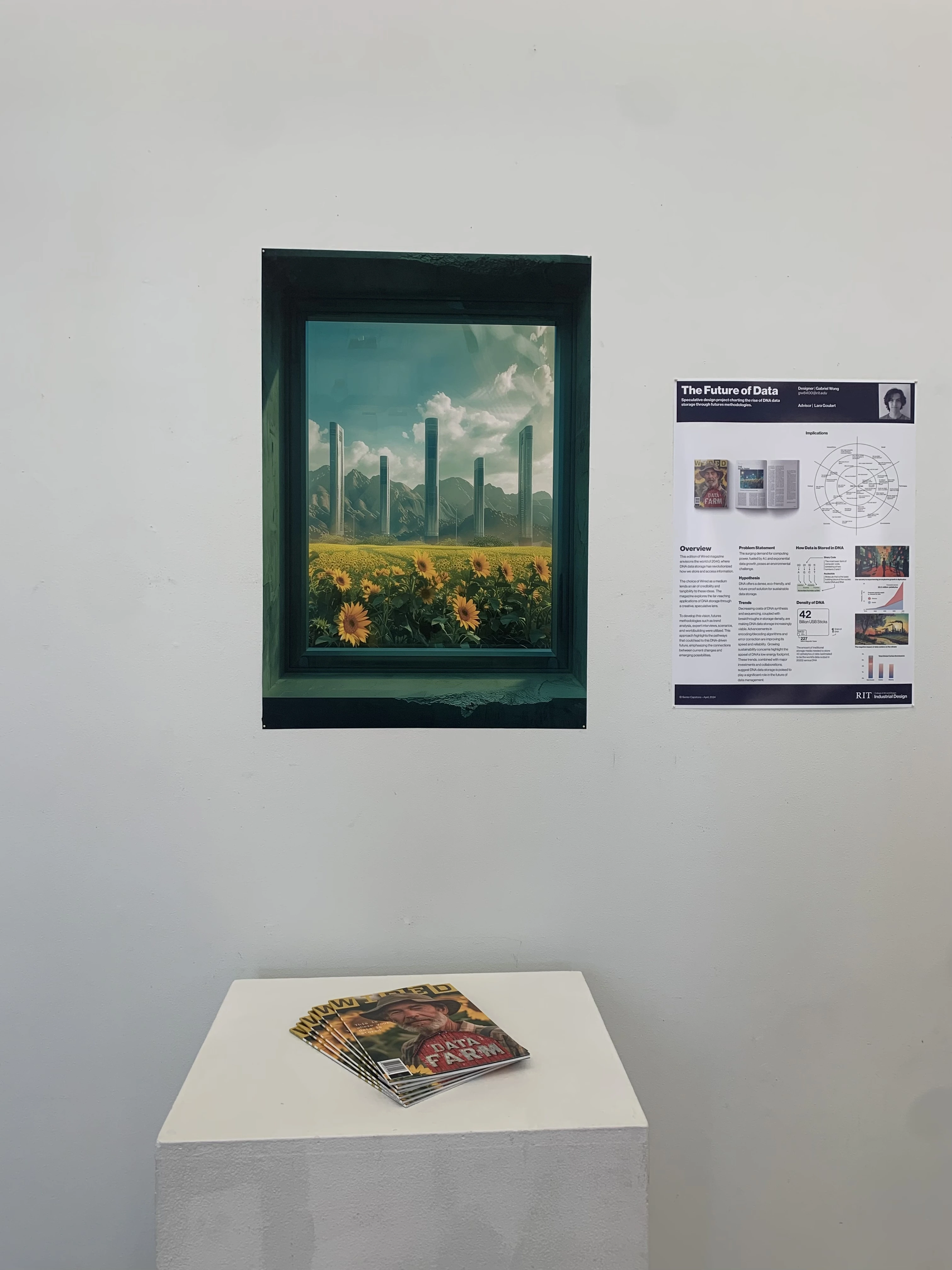
Capstone presentation
This was my senior capstone in Industrial Design. Through the Experimental Realism (opens in new tab) mentorship program, I worked with several futures practitioners along the way.